Nursery textiles · A practical guide
A Parent’s Guide to Choosing Breathable Nursery Textiles
A soft fabric can feel reassuring in the hand. For a baby, though, comfort is only one part of the decision. Fiber, knit, fit, laundering, and the way a textile is used all matter—and none of them can substitute for a safe sleep space.
Published November 4, 2026
Preparing a nursery can make small choices feel consequential. A label promises organic cotton; a fabric looks airy; a garment seems warm without being heavy. Each detail offers a clue, but no single word on a product tag tells the whole story. A thoughtful choice begins with the job the textile is meant to do, then considers how its fibers and construction behave in daily use.
For wearable layers, breathable baby fabrics are often prized because they can feel comfortable against the skin and help avoid an overly stuffy sensation. Yet “breathable” is not a guarantee of temperature regulation, and it is not a safety certification. A baby’s sleepwear should be selected and used according to its instructions, with current safe-sleep recommendations taking priority over marketing language, décor, or a parent’s impression of softness.
This guide explains how to read fiber and care labels, what knit structure can—and cannot—tell you, and how to think about certifications such as GOTS. It also considers the Wren Organic Knit Snuggle Sack as a practical category example: a wearable textile whose material details are useful to assess, but whose proper size, use, and care still depend on the product’s own instructions.
Start with the purpose, not the promise
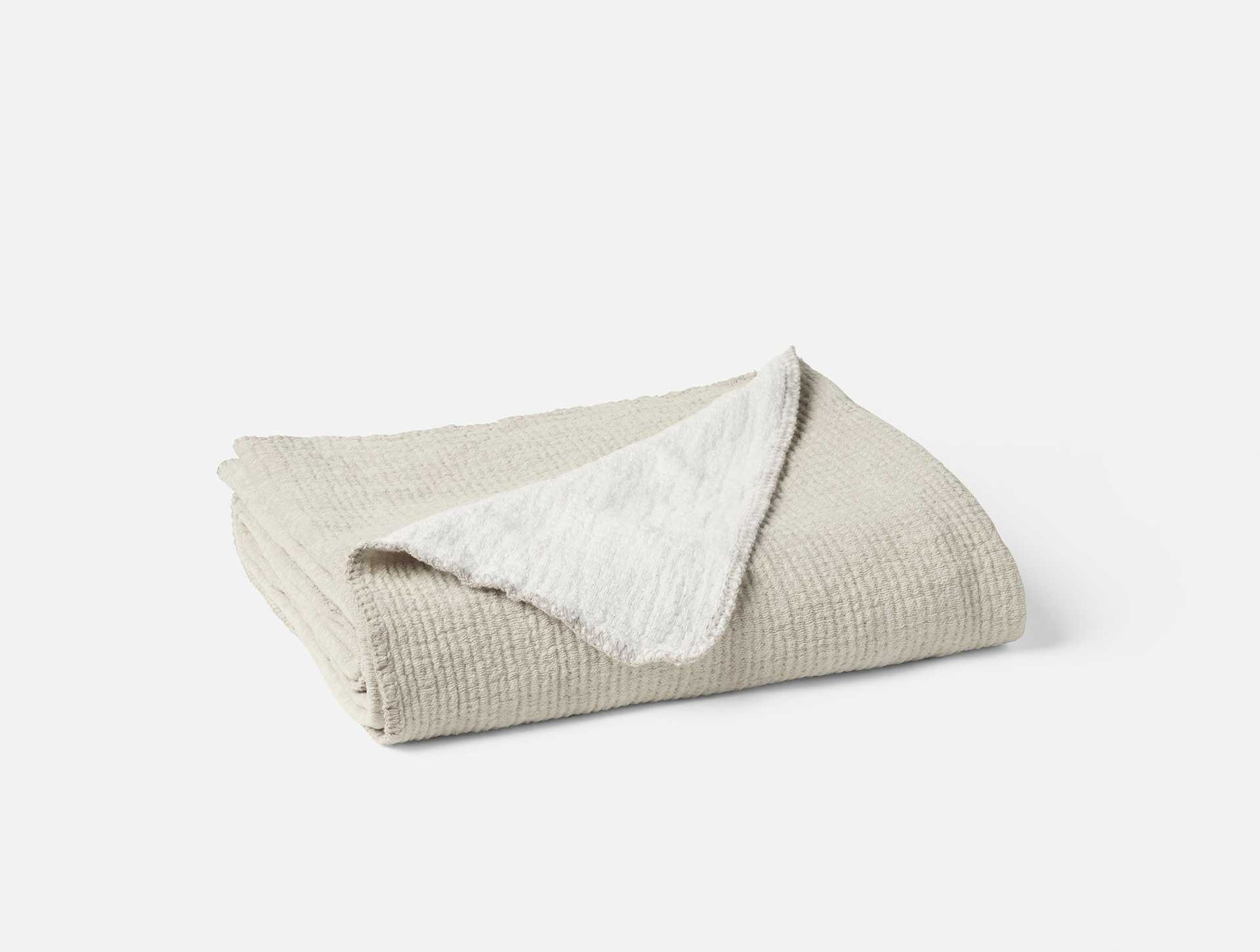
Nursery textiles serve different roles. A fitted sheet covers a mattress; a sleep sack is wearable sleep clothing; a blanket might be used for supervised cuddling or as a decorative layer outside the sleep space. Those uses should not be blurred. A fabric can be lovely for a stroller walk or an adult’s lap and still be inappropriate as loose bedding in an infant’s sleep area.
Before comparing materials, identify where and when the item will be used. Is it meant to be worn during sleep, used as a layer while a caregiver holds the baby, or placed in the room as decoration? Check the product’s stated purpose and age or size guidance. If the use is not clear, seek clarification from the maker rather than assuming that a textile marketed for a nursery is suitable for every nursery situation.
For babies, safe sleep guidance is the starting point, not a finishing check. Follow current recommendations from trusted public-health authorities: use a firm, flat, separate sleep surface designed for infants; place the baby on their back for sleep; and keep the sleep area clear of loose blankets, pillows, soft toys, and other soft objects. Room-sharing without bed-sharing is generally recommended. Always follow local guidance and your child’s clinician for individual questions.
A wearable blanket or sleep sack is different from a loose blanket, but it must still be used as directed and fit the child appropriately. A product’s fabric composition cannot make an unsafe sleep arrangement safe. Nor should a sleep sack be treated as a reason to add extra bedding, use a weighted product, or disregard warnings or instructions.
What fiber content tells you
The fiber label is a useful first stop. It tells you what material makes up the textile, which can help you anticipate its feel, care demands, and likely use. It does not, by itself, establish how a finished garment fits, how warm it will feel in a particular room, or whether it is right for a particular baby.
Organic cotton
Organic cotton is a common choice for baby garments and bedding because it is a plant-based fiber with a familiar, generally smooth hand. In a knit, it can make a comfortable, flexible wearable layer. How open or dense the fabric feels depends on the yarn and construction as well as the fiber itself. A cotton label alone does not tell you that a garment is lightweight, especially cool, or suitable for every season.
Read the full composition, not just the most prominent word on the packaging. Look for the percentage of each fiber and note whether the item includes elastane, polyester, or another material. A blend is not automatically better or worse; it may affect stretch, recovery, durability, or care. What matters is understanding what you are buying and whether the finished item meets your family’s needs.
Wool, alpaca, and other fibers
Wool and alpaca are valued in some textiles for their insulating qualities, while linen and cotton are often selected for a lighter feel. These broad descriptions are not performance guarantees. Fiber diameter, yarn preparation, fabric weight, weave or knit, finish, and fit all shape the experience of the finished product. A natural fiber is not automatically suitable for infant sleepwear, and “natural” does not mean that a textile needs no special care.
Cashmere illustrates why a fiber’s reputation should not replace practical assessment. It can be soft and insulating, but a luxurious hand does not establish that a particular item is appropriate for a baby’s sleep, easy to wash, or designed to meet infant sleepwear needs. Assess the actual product and its instructions rather than relying on the prestige of a material name.
Knit structure: the feel is in the construction
Two garments made from the same fiber can feel quite different. A knit’s loops give it stretch and flexibility; the size and arrangement of those loops influence texture, drape, and how much air can pass through the fabric. A rib knit, for example, often stretches readily across its width. A tighter or more compact knit may feel denser. A textured stitch can create a different hand from a smooth jersey, even when both use cotton yarn.
That is why the word “breathable” deserves a closer look. It may describe a material in general, but the finished textile’s airflow and warmth depend on construction and thickness, too. Product descriptions rarely provide standardized, comparable measurements of these qualities. Treat the word as a helpful description, not a precise thermal rating or proof that a baby will remain at a safe temperature.
When you can examine a garment, look at its weight and overall density, check whether the fabric stretches without becoming distorted, and inspect seams and closures. A tactile check is only one part of the evaluation: it cannot replace the care label, size information, or manufacturer’s directions. Avoid making a decision based solely on a sample swatch or a photograph, since a finished item’s fit and construction are what matter in use.
Fit is especially important for wearable sleep layers. The garment should match the child’s measurements and the product’s age or size guidance, with the neck and arm openings designed so the child cannot slip inside the garment. Follow the manufacturer’s directions for correct sizing and use. If the fit is uncertain, do not improvise or modify the item; contact the maker or choose an appropriately sized alternative.
Reading certifications with care
Certifications can make production claims easier to investigate, but they are not all-purpose endorsements. GOTS, short for the Global Organic Textile Standard, is a textile-processing standard with requirements that apply across defined stages of production. A GOTS label can provide information about certified organic textile processing and related criteria. It does not certify that a product is a medical device, that it prevents irritation, or that it makes a sleep setup safe.
Look for precise claims. Is the particular item certified, or is only one part of its supply chain described as certified? Does the label identify the standard and its scope? A phrase such as “organic cotton” describes a material claim; it is not interchangeable with a certification. Where a claim matters to your decision, check the certifier’s own information and the product’s documentation rather than relying on a vague badge or an unsourced statement.
Fair Trade certification, when present, relates to defined social and production standards; it should not be confused with an organic-fiber certification or an infant-safety assessment. Multiple labels may tell you more about a product’s sourcing and processing, but parents still need to evaluate fit, construction, care requirements, and intended use independently.
Certifications are best read as evidence about a specific part of a product’s story. They can help consumers ask better questions: What is the fiber? Where was it processed? What does the standard cover? They cannot answer every question about comfort, durability, or safe sleep.
A category example: the Wren Organic Knit Snuggle Sack
The Wren Organic Knit Snuggle Sack is described as a wearable layer made from 100% GOTS-certified organic cotton. Its stated construction includes a rib-knit texture, a front button placket, and a bottom opening intended to make changes more convenient. The product information also says it is made in a Fair Trade Certified factory in India and gives machine-wash care instructions.
Those details offer a useful checklist for evaluating any nursery textile. The fiber content is explicit; the knit construction is named; the closures and opening are described; and the care method is provided. The listed certifications give information about material processing and production standards. Together, those facts help a parent understand what the product is, rather than relying only on a broad promise of softness.
They do not answer every practical question. Parents should confirm the correct size and age range, inspect the garment on arrival, and read all warnings and instructions supplied with it. The item’s product description should not be interpreted as independent proof of safe-sleep compliance. A wearable layer should be used only for its stated purpose and in line with current safe-sleep guidance; it should never be used to justify loose bedding or an unsuitable sleep environment.
Its cotton composition and knit texture may appeal to caregivers looking for a washable, wearable layer. But the word “breathable” should not be treated as a temperature-control guarantee. Room conditions, the child’s clothing layers, fit, and the individual’s comfort all matter. If you are unsure whether a garment is appropriate for your baby, ask the child’s health-care professional and consult the manufacturer’s current directions.
Care is part of the comfort equation
Nursery textiles are washed frequently. Care instructions therefore affect not only convenience but also how well an item serves its purpose over time. A machine-washable textile may be easier to rotate through daily use than one requiring special treatment. Neither option is inherently superior; the right choice is one the household can maintain as directed.
Before the first use, read the full care label. Check water temperature, cycle, detergent guidance, drying method, and any advice about closures or shape retention. Avoid assuming that all organic cotton can be washed in the same way. A knit may stretch or change shape if handled differently from the maker’s instructions. Likewise, a textile that calls for dry cleaning may not suit a family looking for an easy-care everyday layer.
For the Wren snuggle sack, the listing gives machine-wash instructions, including a cold gentle cycle and low tumble drying. Follow the care label that accompanies the item if it differs from an online description. Wash with suitable like colors as directed, check buttons and seams periodically, and stop using the garment if it becomes damaged or no longer fits as intended. Care instructions should be followed without adding unapproved treatments or altering the item’s construction.
When washing, use detergents and methods appropriate for the textile and your household. If a baby has sensitive skin or a known allergy, discuss suitable products with a clinician. A “natural,” “organic,” or “hypoallergenic” label cannot guarantee that every child will tolerate a fabric or detergent equally well.
Warmth, layering, and signs to take seriously
Parents often ask which fabric will keep a baby comfortable. The honest answer is that fiber alone cannot settle the question. Room temperature, garment weight, layering, fit, and the child’s individual circumstances all contribute. Avoid dressing a baby based on a material’s reputation or on assumptions drawn from an adult’s comfort. Follow current pediatric guidance for clothing and room conditions, and check the sleepwear maker’s recommendations.
More layers do not necessarily mean more comfort. Overheating is a concern, and a light-looking fabric is not proof that a baby cannot become too warm. Watch the child rather than relying only on hands and feet, which may feel cool even when the body is comfortable. Follow medical guidance on what signs to monitor, and contact a health-care professional if you are concerned about the baby’s temperature or wellbeing.
Do not use a weighted sleep sack, weighted blanket, or other weighted product for an infant unless a qualified clinician has specifically advised otherwise and the product is appropriate under current guidance. Never add a loose blanket to compensate for a garment that seems too light. A textile should complement a safe sleep plan, not become the plan.
A parent’s label-reading checklist
When comparing nursery textiles, a short, consistent checklist can make the decision clearer:
- Purpose: Is the item made for sleep, supervised use, or decoration? Use it only as directed.
- Fiber content: Read the full composition and percentages instead of relying on the largest word on the tag.
- Construction: Note the knit or weave, closures, seams, and any details that affect stretch or fit.
- Fit and size: Use the maker’s size guidance and confirm that the garment fits the child correctly.
- Care: Check washing and drying requirements before buying, then follow the label consistently.
- Certifications: Identify the named standard and what it covers; do not treat it as a safe-sleep approval.
- Condition: Check for damage, loose components, or changes in fit and discontinue use when needed.
- Sleep setup: Keep safe-sleep guidance at the center, regardless of the textile’s softness or fiber.
This approach replaces vague impressions with useful questions. It also makes clear where product information ends: a label can describe fiber and care, but it cannot assess a child’s individual needs or certify an entire sleep arrangement.
The bigger idea: thoughtful materials, practical routines
A nursery does not need to be filled with specialized fabrics to be comfortable. A small number of well-understood, properly cared-for textiles can be more useful than a crowded drawer of items chosen for attractive claims. The best choice is often the one that meets its intended purpose, fits correctly, can be laundered as required, and works within a safe sleep routine.
Organic cotton knits may be a practical option for wearable layers when their construction, fit, and care suit the family. Certifications can add context about how a textile was produced. Clear instructions can make daily use less uncertain. But no fiber, stitch, or certification erases the need to follow infant sleep recommendations.
When evaluating a nursery textile, ask what it is made of, how it is constructed, how it should be cared for, and what the product is designed to do. Then make sure its use fits current guidance for the child’s age and circumstances. That is a quieter kind of luxury: not a promise that fabric can do everything, but a clear understanding of what it can—and cannot—do.
Frequently asked questions
Does organic cotton automatically mean breathable?
No. Fiber content is only one factor. Yarn, knit density, fabric weight, finishing, and garment fit also affect how a textile feels and performs. “Breathable” is not a standardized promise that a baby will stay at a particular temperature.
Does GOTS certification mean a product is safe for infant sleep?
No. GOTS relates to defined textile processing and production criteria. It does not replace safe-sleep guidance, prove that a product fits a particular child, or certify the whole sleep environment.
Can a sleep sack replace safe-sleep practices?
No. A wearable sleep layer does not replace a firm, flat, separate sleep surface, back placement, or a clear sleep area. Use any sleepwear only as directed and in accordance with current recommendations.
What matters most when choosing a nursery textile?
Start with its intended purpose, then assess fiber content, construction, fit, care instructions, and any relevant certifications. Make sure its use is consistent with current safe-sleep guidance and your child’s individual needs.